The Mermaid Lineage, the Rose Cross, and the Templar Legacy
Dedicated to the Guardians of the Hidden Tradition
“Where the Icknield Way meets the Roman road, the earth remembers:
a rose for Lady Roisia, a cross for the faithful, and a mermaid to guard their secret.”
Gretchen Cornwall, Author, TV Presenter, and Podcaster
Download the PDF: Reclaiming the Discovery of Melusine in Royston Cave
Introduction
In the chalk heart of Hertfordshire, beneath the meeting of two of England’s oldest roads, lies a chamber carved from living earth. Royston Cave, discovered by accident in 1742, has since become a crucible of mystery, its walls inscribed with saints, monarchs, and symbols that defy the limits of orthodox explanation. For nearly three centuries scholars, antiquaries, and theorists have debated its origin… Roman, Templar, Freemason… but none could wholly account for the eclectic blend of Christian devotion and pre-Christian imagery within its circular walls.
In November 2022, during a filmed investigation for The Curse of Oak Island, I entered Royston Cave with Marty and Alex Lagina and the Freemason, historian, Charles Barkhouse to present new research that reframed one of its most overlooked carvings.

In that televised moment and in my accompanying publication Oak Island’s Mysteries of the Map: House of Rochefoucauld, Templar Statue, Royston Cave (2022), I identified this figure not as a simple carving of a queen under house arrest, but as Melusine… the half-mermaid, half-dragon ancestress of the House of Lusignan and emblem of a medieval initiatory tradition carried by Eleanor of Aquitaine and Lady Roisia de Vere.[1]

Fig. 2. Image courtesy of The History Channel’s The Curse of Oak Island, November 2022. Watch here
This paper expands upon that identification and documents its precedence in print and broadcast form. It situates Melusine within the iconographic and esoteric vocabulary of the twelfth and thirteenth centuries, re-examining the Royston carvings through the lenses of heraldry, Rosicrucian symbolism, and Templar spirituality. By tracing the intertwined genealogies of the de Vere, Lusignan, and Rochefoucauld families as a Tradition, it argues that the cave’s imagery encodes a mermaid lineage… a sacred feminine current that unites local patronage with continental power families. It further proposes that Lady Roisia’s monumental cross above the cave embodies an early expression of the Rose Cross tradition, prefiguring the Rosicrucian ideal by four centuries.
Historical Background
Royston stands where the prehistoric Icknield Way intersects the Roman Ermine Street… a crossroads of sacred geography. When workmen uncovered the cave’s shaft in 1742, antiquary William Stukeley hurried to examine “a most agreeable subterranean recess hewn out of pure chalk.”[2] Stukeley and his rival Charles Parkin sparred over its purpose: Stukeley saw it as the sepulchre of Lady Roisia de Vere; Parkin, as a hermit’s chapel attached to the Augustinian priory. Joseph Beldam’s later Origin and Use of Royston Cave (1852; rev. 1884) catalogued the carvings in Victorian detail but left their unity unresolved.[3]
Royston Cave had begun its life as a dene hole. Chalk being a necessary building material for the bustling new market town of Royston where the Knights Templar held several small properties, much to the chagrin of the Augustinians whose town it was… The cave however was dug with purpose and chosen for its geomantic location. The fruits of which were the chalk, once excavated, leaving behind a hidden Templar Initiation Chamber…
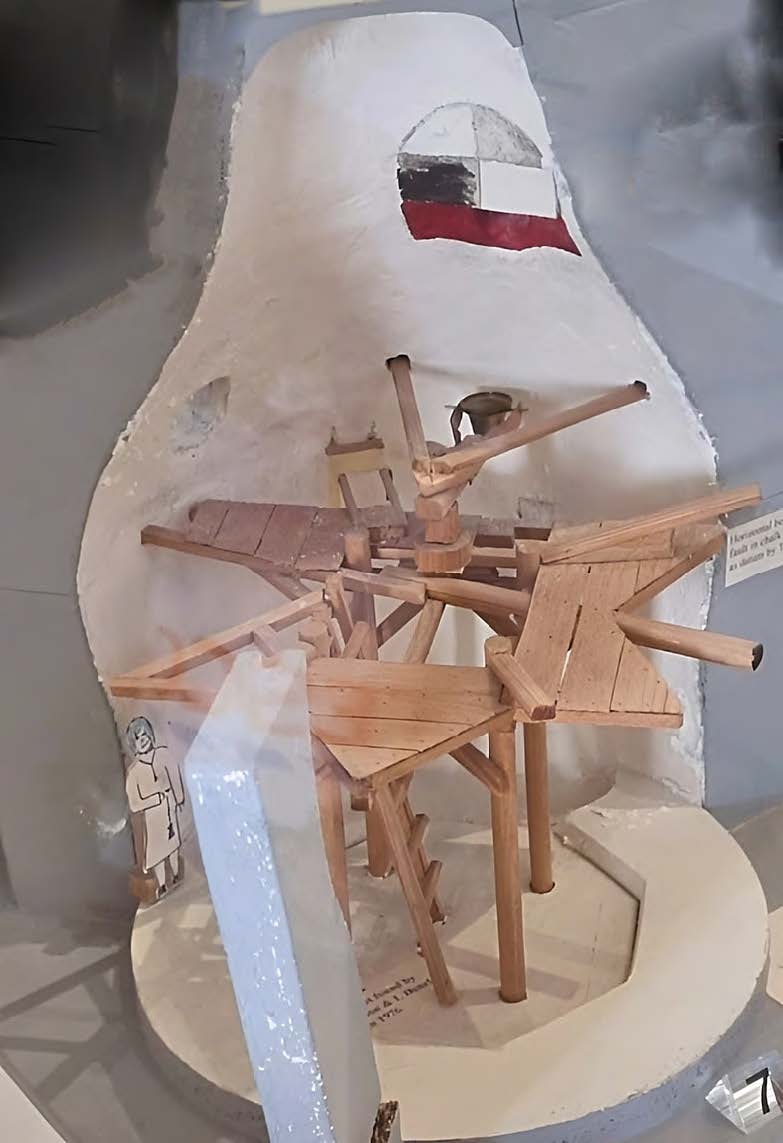
Fig.3. Photo by G. Cornwall of the model of Royston Cave in the Royston Museum
I have identified Melusine, portrayed as Eleanor of Aquitaine the troubadour queen, the royal matriarch who embodied both the sacred feminine and the initiatory wisdom of her age. The Melusine carving communicates lineage, theology, and esoteric teaching. Earlier scholarship failed to identify Eleanor as her ancestor, Melusine.
My fieldwork on Royston began in 2006 through 2022, culminating in the publication of Oak Island’s Mysteries of the Map and its accompanying presentation on The Curse of Oak Island, corrected that oversight. By identifying the specific figure as Eleanor depicted in the guise of Melusine, I restored the carving to its historical and dynastic context. The image recalls the mermaid-serpent badge of the Lusignan and Rochefoucauld families… a heraldic sign Eleanor inherited through her maternal line.[4] Within the intimate devotional space of Royston Cave, this symbol would have carried deep meaning for Lady Roisia de Vere and Geoffrey de Mandeville, whose ties to Eleanor’s court and to the Templar order form the foundation of the cave’s mystery.

Fig.4. above
How the Identification Was Made
My discovery that the Royston carving traditionally labeled Eleanor of Aquitaine was intended to depict Eleanor as Melusine, arose from direct observation supported by my multi-disciplinary background which included historical costume and armor. In studying medieval dress, one learns that every fold and fastening conveys social and symbolic meaning. None of the other female carvings in the cave displays the same distinctive garment construction. They wear straight, tunic-style dresses that fall freely to the floor, tied at the waist with simple belts… modest attire entirely appropriate to twelfth-century convention. Their feet are hidden, as propriety required. The male figures, by contrast, are depicted in shorter tunics with visible legs and the clearly gendered characteristics typical of the period.
The figure identified as Eleanor departs strikingly from this pattern. She occupies a recessed niche, posed as if perched upon a windowsill… an unusual, almost theatrical position for a carving. Her crown is unmistakable: a circlet of fleurons identical in form to that on her effigy at Fontevraud Abbey in France, where she lies beside Henry II.
 Fig. 5. Eleanore by Beldam

Fig.6. Eleanor’s effigy, V&A, by Cornwall
Although the original effigy suffered damage, the above nineteenth-century plaster cast at the Victoria and Albert Museum preserves the crown’s original design, allowing a precise comparison. When set beside Joseph Beldam’s 1884 drawing of the Royston figure, the congruence is undeniable.
Yet the key evidence lies not in the crown but in the drapery. Unlike the other women, this figure’s gown does not hang freely; it pinches tightly at the ankles, an attitude that would have been scandalous in medieval decorum. Below this tapering form, the sculpted folds of fabric spill over the ledge in a flowing curve that reads unmistakably as the tail of a mermaid. Her torso composition assumes the geometry of a Vesica Piscis, the almond-shaped form that underlies the Flower of Life and was long associated with feminine divinity and the passage between worlds. Through this synthesis of iconography and sacred proportion, the carver rendered Eleanor not simply as a queen but as Melusine incarnate… the water-born guardian of wisdom and the ancestral mother of her line.
The carving is not that of Lady Roisia, as no description of her is to be found in history. The crown and identification of other carvings in the cave align the figure with Eleanor. Such as her son Richard the Lionheart, his wife, and her husband, Henry II of England, whose likeness also acts as a code for Saint George.
Chronologically, the Royston carvings align precisely with the generation that linked the De Mandeville’s of England to the courts of Aquitaine and Anjou. Geoffrey de Mandeville, 1st Earl of Essex (c. 1100–1144), and his wife Lady Roisia de Vere (c. 1100–1150) were active patrons of the Knights Templar during the reign of King Stephen. Their lifetimes overlap with that of Eleanor of Aquitaine (1122–1204), who by the 1140s was already Queen of France and renowned across Christendom as a patron of the arts and troubadour learning. The Royston figures would thus have been carved within decades of Eleanor’s youth, when her image and lineage as the Duchess of Aquitaine… and as heir to the Lusignan and Rochefoucauld traditions of Melusine… were current and celebrated. This temporal proximity reinforces the conclusion that the sculptor’s model was not an anachronistic memory but a living queen, rendered in symbolic form by contemporaries who understood her mythic significance.
[5] For Geoffrey de Mandeville’s chronology and Templar patronage, see J. H. Round, Geoffrey de Mandeville: A Study of the Anarchy (London: Longmans, 1892), 3–12; and William Dugdale, Monasticon Anglicanum, vol. 4 (London, 1846), 158–59.
On Eleanor of Aquitaine’s life and cultural influence, see Alison Weir, Eleanor of Aquitaine: A Life (London: Jonathan Cape, 1999), 1–25; and Marion Meade, Eleanor of Aquitaine: A Biography (New York: Hawthorn Books, 1977).
[6] Lady Roisia de Vere’s marriage to Geoffrey de Mandeville and her status as the eponymous lady of Royston are discussed in Joseph Beldam, The Origin and Use of the Royston Cave, 3rd ed. (Royston: Warren, 1884), 11–14; and in Sylvia Beamon, Royston Cave: Used by Saints or Sinners? (Baldock: Cortney Publications, 1992), 20–23. The de Vere family’s patronage and genealogical links to the continental nobility of Poitou and Aquitaine are also summarized in George Edward Cokayne, The Complete Peerage of England, Scotland, Ireland, Great Britain and the United Kingdom, vol. 5 (London: St. Catherine Press, 1926), 123–25.
The Rose Cross of Lady Roisia

Fig. 7. Gretchen Cornwall 2022, before filming, with the remains of Lady Roisia’s cross (foot support).
Courtesy of John Cornwall
Lady Roisia de Vere’s very name, Roisia, means rose, and her mother, also named Rose, confirms that the symbol was hereditary as well as devotional. Above the cave once stood the great stone cross she commissioned… the Lady’s Cross… which marked the junction of the ancient ways. This literal “rose and cross” predates the formal Rosicrucian fraternity by centuries, yet it embodies the same ideal: the union of love and sacrifice, nature and spirit, feminine and masculine.
In my 2022 book I proposed that Lady Roisia’s Cross represents an early manifestation of the Rose Cross tradition… not a seventeenth-century emergence but a continuity of medieval mysticism that found expression in stone long before the manifestos of the Rosicrucians.[7] The rose was the symbol of the unfolding bloom of divine wisdom; the cross, the path of transformation. Together, they signify the alchemy of the soul that underlies both Christian and hermetic traditions. Lady Roisia, educated within the same aristocratic and spiritual circles as Eleanor of Aquitaine, would have understood this esoteric synthesis. Her cross at Royston thus becomes more than a boundary marker: it is the vertical axis of a sacred geometry connecting heaven, earth, and the hidden chamber below.
The placement of the cave near the cross cannot be accidental. The shaft aligns almost perfectly with the intersection of the Icknield Way and the Roman Ermine Street, forming a geomantic node that later Templar surveyors would have recognized instantly. Within that cave, the carvings of Eleanor-Melusine and of Roisia and Geoffrey appear as guardians of the Rose Cross mystery: the spiritual descent of wisdom through bloodline, encoded in iconography for those initiated to read it. Though not in its original location, it is close enough to the center of the crossroads.
Melusine: The Mermaid and the Dragon Queen

Fig.8. AI Image by Gretchen Cornwall
Melusine, half woman and half serpent-fish, is far more than a medieval fairy tale. In the symbology of the twelfth century she personified the fusion of water and fire… the two elements of the alchemical mind. As mermaid, she swims in the sacred waters of intuition and birth; as dragon, she rises in the air, the fuel of fiery transformation and fierce protection. The chronicles of the House of Lusignan describe how Melusine, when betrayed, became a dragon and circled the tower of Château Lusignan in defense of her descendants. This mythic pattern recurs across Europe: the dragon is not seen as a devil, but as a guardian of lineage and gnosis, as evidenced in the Order of the Dragon.
The Royston carving captures this dual essence: The flowing tail, the symbolic torso, belong to the mermaid, and the continental legend of her transformation into a fiery dragon in times of peril seals all elements of Earth, Air, Fire, and Water into one training image.
To a medieval initiate, these would not have been contradictory forms but stages of the same transmutation. Eleanor of Aquitaine, through her descent from the Lusignan and Rochefoucauld lines, inherited Melusine’s DNA and traditions. Her daughter Marie of Champagne transmitted the symbol into the courtly literature of the Grail and of fin’amor. Lady Roisia, related through the de Vere connection, would have known this emblem not merely as heraldry but as sacred teaching: the discipline of water and fire, intuition and illumination, the feminine art of transformation.
The presence of St George and the Dragon carved nearby deepens this dialogue. In popular legend George slays the dragon; in esoteric reading he liberates it… releasing the bound creative power of nature so it may ascend. The juxtaposition of George and Melusine in the same chamber expresses this paradox: the knight and the dragon are two halves of one initiatory process. Royston Cave thus becomes a microcosm of Europe’s alchemical mythology, where every carving is both history and allegory.
The Tradition of Fire and Water
In the teachings that flowed through Eleanor of Aquitaine’s courts and the circles of her daughters, two elemental forces governed the spiritual art: water and fire. Water signified the inner life of the soul, baptismal wisdom, and the feminine mystery of renewal. Fire represented illumination, courage, and the mind’s purification through trial. To master both was the goal of the alchemy of the mind… the invisible practice behind the visible symbols of courtly love and sacred architecture.
The Royston carving of Melusine embodies that alchemy. Her serpentine lower body, flowing as water, anchors her in the depths of creation; her dragon aspect expresses the ascent of fiery spirit. The two elements coexist, balanced and eternal. This is not decorative mythology but coded theology: a visual meditation on the transmutation of the human soul.
Within this framework, Lady Roisia de Vere and her family appear not merely as patrons of piety but as students of the esoteric tradition that Eleanor herself nurtured. The Rose Cross above and the Mermaid of Fire and Water below function together as initiatory emblems. To descend into the cave was to enter the womb of transformation; to ascend again through the shaft into daylight was to emerge reborn. The entire site, from the crossroads to the carvings, forms a diagram of spiritual rebirth expressed through the geometry of the elements. The open stone tomb situated on the side near the entrance is a testament to resurrection practices within the womb of the cave.
The Templars and Their Patron Saint
Among the carved figures within Royston Cave is John the Baptist, the patron saint of the Knights Templar. His image reinforces the spiritual identity of the Order as one founded on baptismal initiation and purification through the element of water. The Templars’ devotion to John was not merely hagiographic but initiatory: he represented the forerunner of illumination, the voice crying in the wilderness who prepared the path for divine gnosis. Within the cave’s iconographic program, the Baptist stands as the masculine counterpart to Melusine’s feminine mysteries of water and rebirth, together forming the alchemical balance of fire and water that defined the inner teachings of the Order. Indeed, their images are within reach of each other… the Baptist’s living waters descending from above, and Melusine’s sacred current rising from below… completing the circle of initiation. Such is the mystery of the Lady of the Lake: the eternal waters that both purify and awaken, joining the prophetic fire of John with the healing tide of the feminine divine.
Lady Roisia de Vere and the Melusine Descent
The de Vere family stood among England’s great Norman houses, their title of Oxford linking them to the intellectual and spiritual heart of the realm. Continental alliances bound them to the courts of Poitou and Aquitaine, where the legend of Melusine had already taken root. Medieval genealogists traced the Lusignan lords of Poitou to this fairy ancestress… a radiant woman who built castles by night and vanished when betrayed. The Rochefoucauld family, avowed cousins of the Lusignans and allies through marriage, adopted the same emblem: the crowned mermaid or serpent-woman. Their heraldry and cathedral effigies testify to the persistence of this mythic identity.[8] The Rochefoucualds state that they are the senior line of Melusine but their ‘younger’ cousin simply wrote the story down first…
Through these networks of marriage and patronage, Lady Roisia de Vere would have known the story of Melusine not as superstition but as family tradition… the memory of a progenitrix who combined divine inspiration within heroic and human terms. Roisia’s own name, Rose, echoes this duality: beauty and thorn, secrecy and revelation. The union of her “Rose” with the carved “Cross” above the cave becomes a literal manifestation of the Rose-Cross mystery.
My 2022 analysis proposed that the cave’s iconography crystallizes this convergence: the Mermaid Lineage of Eleanor and Roisia meeting the Templar guardianship of Geoffrey de Mandeville. Geoffrey’s patronage of the Templars is well attested. He granted them lands at Temple London, where his effigy still lies… sword drawn, the very image of a spiritual knight.


Fig.9. Geoffrey de Mandeville effigy Fig.10. Statue by James Sherwood
Fig. 10. Geoffrey de Mandeville, at Temple Church London, by Gretchen Cornwall
Geoffrey’s relationship with the Order was not symbolic but demonstrably practical. Charters record that around 1130 he granted the Knights Templar a portion of his estate in Holborn, outside the City of London, to establish their first English house, later known as the Old Temple. This early endowment gave the fledgling Order its initial foothold in England and set the precedent for its later expansion to Fleet Street, where the New Temple and the round-nave Temple Church were constructed in the later twelfth century. Through this act of patronage Geoffrey de Mandeville became, in effect, the Templars’ first English founder and protector, linking his name permanently with their sacred geography. It was therefore fitting that, after his turbulent death and reconciliation with the Church, he should be buried beneath the very stones his benefaction had made possible. The circular plan of Temple Church, echoed in the design of Royston Cave, preserves this legacy of initiation and chivalric faith. ¹ [12]

Fig.11. Temple Church, London by Gretchen Cornwall
His turbulent death and excommunication by King Stephen led to the legend that his body was suspended above ground until the Templars claimed him for burial in consecrated soil. It is entirely fitting that Royston Cave, lying on the road between London’s Temple and the eastern shires, should preserve his and Roisia’s memory in relief. Their carving on the floor of the cave mirrors the ancient practice of perpetual prayer for the dead… the Templars watch over their benefactor and founders of their Initiation Chamber.[9]

Fig. 12. Carved effigies in the floor of Royston Cave of Lady and Lord de Mandeville.
Perpetual prayer and honor of their patronage of the Knights Templar
In this light, the cave becomes a crypt of lineage and initiation: a memorial to Geoffrey’s chivalric stoicism to Empress Mathildes’ claim to the throne per Henry I of England’s final wishes, a devotional shrine for Roisia’s Rose-Cross alchemy practices, and a repository of the Melusine tradition that linked them to the continent’s mystical dynasties. By aligning these strands, my research restored Royston Cave to its rightful place within this European tapestry… not an isolated curiosity but an English expression of a transnational sacred and alchemical heritage.
Although no documented contract survives showing a direct encounter between Eleanor of Aquitaine and Geoffrey de Mandeville, the overlapping dates of their lives and the network of Norman-French noble alliances allow a reasoned argument that Geoffrey’s patronage of the Templars and his wife Lady Roisia de Vere placed him within the same cultural matrix in which Eleanor’s Lusignan-Rochefoucauld line circulated.
Ley Lines and the Michael–Mary Current
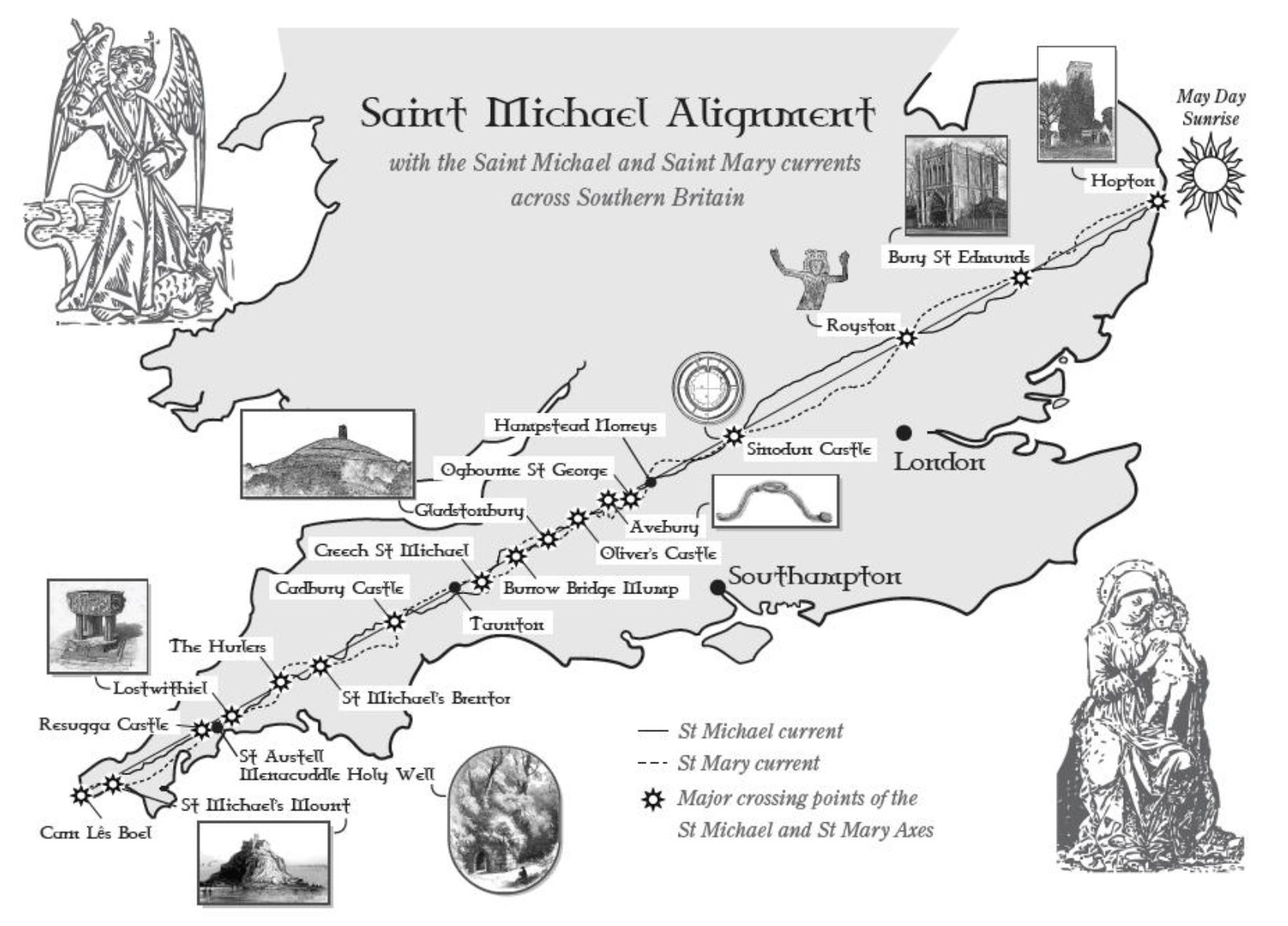
Fig.13. Missing attribution for the map. I am happy to correct this via my website if contacted.
Royston Cave occupies a unique position within England’s sacred landscape, aligned not only with the ancient Icknield Way and the Roman Ermine Street but also with what modern dowsers and geomancers identify as the Michael and Mary line… a pair of telluric currents that traverse the country from St Michael’s Mount in Cornwall to Bury St Edmunds in Suffolk. These complementary lines of masculine and feminine energy, named after the archangel and the Virgin, weave together at a series of ancient shrines and Templar sites. In Oak Island’s Mysteries of the Map (2022), I noted that *“Royston Cave lies upon this very convergence, the point at which the Michael and Mary currents intertwine beneath the English chalk, forming a node of spiritual equilibrium directly aligned with the Prime Meridian.”*[10] The cave’s proximity to the Greenwich line is dead on and further enhances its symbolic placement: a meeting of earth energies and celestial measure, geography and sacred geometry. Within this framework, the carvings of the Rose Cross and the mermaid-dragon of Melusine become more than devotional art… they mark the energetic heart of a terrestrial mandala that unites ancient paths with cosmic alignment.
[11] Gretchen Cornwall, Oak Island’s Mysteries of the Map: House of Rochefoucauld, Templar Statue, Royston Cave (2022), 148–150.

Fig.14. Map by Gretchen Cornwall via Google Earth Maps
Geometry and the Templar Roads
No aspect of Royston Cave can be understood without acknowledging its placement. The Templars were not mere builders of stone but surveyors of energy… masters of sacred geography who inherited both Roman engineering and Eastern geomancy. Royston occupies a strategic and symbolic intersection where the prehistoric Icknield Way crosses the Roman Ermine Street. This crossing of ancient arteries forms a node of power, both terrestrial and spiritual, where movement, commerce, and pilgrimage converge.
It was here, just north of the Templar headquarters in London, that Geoffrey de Mandeville and Lady Roisia established their market town. To control the intersection was to control the flow of goods, intelligence, and influence between the capital and the east-west ports. Yet the decision to hollow a chapel beneath the crossroads suggests more than strategy; it reveals awareness of a deeper geometry. The intersection itself forms the shape of a cross, and beneath it the circular chamber of the cave mirrors the Templar emblem… the union of the circle and the cross, heaven and earth.
Within the cave is Saint Catherine and her wheel… A code for the compass and the secrets of navigation and surveying.
My geomantic research, outlined briefly here and reserved for full publication elsewhere, indicates that the positioning of Royston Cave was aligned not only with these physical routes but also with broader energetic lines that link it to the network of Templar foundations across England.
The Templars named the nearby town Baldock, after Baghdad, echoing their reverence for the wisdom of the East. Yet Baldock, located 8.5 miles southwest, lacks the geomantic precision of Royston. Only Royston sits exactly where the ancient and the Roman paths intersect… a meeting of worlds.
At this crossroads, the carvings below and the cross above form a single diagram. The Rose Cross of Lady Roisia crowns the surface world; the subterranean Melusine marks the depth. Between them runs the axis mundi… the spiritual line that joins the two. Such vertical symbolism and circular architecture pervade the Tradition of Templarism. Royston Cave is the same circumference as the Money Pit on Oak Island and the inverted tower of Sintra, Portugal. All built at different points in history within the same Tradition.
The cave also served practical functions: a watch post, a storage vault, a secret meeting place for knights, and its primary significance is metaphysical. The Icknield Way, older than Rome itself, runs from the royal estates near Sandringham in the northeast to Bristol in the southwest… from one coast to another, crossing the chalk downs like a white vein through England’s spine. The Templars would have known it well; they controlled the port at Bristol and used this road to move both relics and intelligence. To position their chapel at Royston was to anchor a spiritual circuit running the length of the land.
In this sense, the cave becomes a temple within a temple: the geometric heart of an invisible cathedral that stretches across England. The figure of Melusine-Eleanor, carved within, presides over this network like a guardian of the waters that flow beneath the chalk. She embodies not only the feminine wisdom of the Rose Cross but also the watchful dragon of air and fire… the unseen protector of the line.
Reclaiming the Discovery
When I first presented the identification of Melusine in Royston Cave on The Curse of Oak Island in November 2022, standing within the chalk chamber with Marty and Alex Lagina and Charles Barkhouse, it marked the culmination of years of research into the hidden symbolism of this sacred site. My accompanying publication, the same day, established the evidentiary foundation: the carving’s morphology, its heraldic parallels, and its placement within the lineage of Eleanor of Aquitaine, Lady Roisia de Vere, and the Templar legacy of Geoffrey de Mandeville. This identification, supported by direct field observation, preceded later restatements of similar ideas by several years and remains the original academic articulation of the Melusine-Eleanor-Roisia connection.[12]
The accompanying carvings… such as John the Baptist, Templar brothers, the direct and daring gaze of the she-la-na-gig, a profusion of hearts, and sacred axes from the Holy Land… complete a visual theology. A medieval Tracing Board meant to initiate and instruct while undergoing profound, life-altering meditation practices.
Melusine and the Alchemy of the Elements
In the deeper strata of Rosicrucian and alchemical symbolism, Melusine may be read as the complete embodiment of the four elements and their corresponding states of consciousness. As mermaid, she masters the waters of the inner planes, the subtle currents of intuition, emotion, and memory that flow over the dense element of earth. To “swim” in those waters is to cultivate the meditative faculty that moves with, rather than against, the tides of the soul. Her serpentine tail, gliding through this unseen ocean, signifies both adaptability, strength and grace in the psychic realm. Her form is far more complex and of a higher order than the symbol of a fish, iconic of other noble families below the senior line.
When she transforms into her dragon aspect, Melusine reveals the explosive protective octave of her nature: the synthesis of air and fire. Fire is illumination, the spark of divine intellect; air is breath and movement, the freedom of thought. Together they signify the awakened spirit in power, rising from the depths of intuition toward the light of comprehension. Thus Melusine’s dual form is not a curse but an initiation… she unites the four classical elements within herself: earth (form), water (feeling), air (mind), and fire (spirit).
Within the meditative practice of Rose Cross alchemy, this union of elements represents the perfected equilibrium of the human soul. The adept who contemplates Melusine learns to harmonize the inner opposites, achieving what the hermetic philosophers called the marriage of the elements. She is, therefore, not merely a mythic guardian but a living allegory of transformation… the Anima Mundi in her most compassionate and protective guise.
Melusine and the Alchemy of the Elements
In the deeper strata of Rosicrucian and alchemical symbolism, Melusine may be read as the complete embodiment of the four elements and their corresponding states of consciousness. As mermaid, she masters the waters of the inner planes, the subtle currents of intuition, emotion, and memory that flow over the dense element of earth. To “swim” in those waters is to cultivate the meditative faculty that moves with, rather than against, the tides of the soul. Her serpentine tail, gliding through this unseen ocean, signifies both adaptability, strength and grace in the psychic realm. Her form is far more complex and of a higher order than the symbol of a fish, iconic of other noble families below the senior line.
When she transforms into her dragon aspect, Melusine reveals the explosive protective octave of her nature: the synthesis of air and fire. Fire is illumination, the spark of divine intellect; air is breath and movement, the freedom of thought. Together they signify the awakened spirit in power, rising from the depths of intuition toward the light of comprehension. Thus Melusine’s dual form is not a curse but an initiation… she unites the four classical elements within herself: earth (form), water (feeling), air (mind), and fire (spirit).
Within the meditative practice of Rose Cross alchemy, this union of elements represents the perfected equilibrium of the human soul. The adept who contemplates Melusine learns to harmonize the inner opposites, achieving what the hermetic philosophers called the marriage of the elements. She is, therefore, not merely a mythic guardian but a living allegory of transformation… the Anima Mundi in her most compassionate and protective guise.
In Conclusion
By recognizing the Melusine carving for what it is, we restore continuity between the feminine and the knightly, between Royston’s quiet chamber and the grand narrative of European mysticism. The de Vere, Lusignan, and Rochefoucauld lines converge here not only by blood but by symbol… a family of ideas as much as of names. The Templars who prayed in this space honoured their patrons and, preserved a tradition that would re-emerge centuries later in Rosicrucian philosophy: the belief that divine wisdom hides in plain sight, awaiting those with eyes to see.
Future work will elaborate the geomantic alignments in detail, correlating the distances between Templar sites, the leys of England’s sacred landscape, and the broader mythic cartography of the Rose Cross. For now, it is enough to reclaim Royston Cave for what it has always been: a sanctuary of synthesis, where Christianity met chivalry, where the mermaid guarded the secrets of the circle, and where the Rose of Lady Roisia still blooms in stone.
In the hidden tradition, Melusine is code for Mary Magdalene. The very name Magdalene derives from the Hebrew Migdal, meaning tower. Thus, when Melusine in her dragon form circles the Tower of Château Lusignan, she enacts the mystery of the Magdalene bloodline: the guardian of divine wisdom encircling her sacred lineage. Medieval sources refer to this tower as La Tour de la Magdeleine, the Tower of the Magdalene, revealing that the legend is encoded. In this reading, the Dragon Queen is not a monster but a symbol of the Magdalene Sophia, the enlightened feminine force safeguarding spiritual truth. Further discussion of this identification and its hermetic lineage appears in my book, Oak Island’s Mysteries of the Map (2022).

Fig.15. Mary Magdalene Teaching
Figures
1 Alex Lagina, Gretchen Cornwall, Marty Lagina, Charles Barkhouse, and Rick Lagina. Photo of Rick Lagina courtesy of John Edwards.
2 Still from The Curse of Oak Island, The History Channel, November 2022. Courtesy of Prometheus Entertainment.
3 Model of Royston Cave, Royston Museum. Photo by Gretchen Cornwall.
4 Carving identified as Eleanor of Aquitaine, Royston Cave. Photo by Gretchen Cornwall.
5 Eleanor of Aquitaine, drawing by Joseph Beldam from The Origin and Use of Royston Cave (1884).
6 Effigy of Eleanor of Aquitaine, Victoria and Albert Museum, London. Photo by Gretchen Cornwall.
7 Remains of Lady Roisia’s Cross (foot support), photograph by Gretchen Cornwall (2022). Courtesy of John Cornwall.
8 Melusine, digital image created by Gretchen Cornwall (2022).
9 Effigy of Geoffrey de Mandeville, Temple Church, London. Photo by Gretchen Cornwall.
10 Statue of Geoffrey de Mandeville, sculpture by James Sherwood.
11 Temple Church, London, photograph by Gretchen Cornwall.
12 Carved effigies in the floor of Royston Cave representing Lord and Lady de Mandeville.
13 Map showing Michael–Mary ley line convergence at Royston. Attribution pending; please contact the author via gretchencornwall.com for correction.
14 Geomantic map of Royston alignment, created by Gretchen Cornwall using Google Earth Maps.
15 Mary Magdalene Teaching. Artist unknown.
Selected Bibliography
Beamon, Sylvia. Royston Cave: Used by Saints or Sinners? Baldock: Cortney Publications, 1992.
Beldam, Joseph. The Origin and Use of the Royston Cave. 3rd ed. Royston: Warren, 1884.
Cokayne, George Edward. The Complete Peerage of England, Scotland, Ireland, Great Britain and the United Kingdom. Vol. 5. London: St. Catherine Press, 1926.
Cornwall, Gretchen. Oak Island’s Mysteries of the Map: House of Rochefoucauld, Templar Statue, Royston Cave. 2022.
Dugdale, William. Monasticon Anglicanum. Vol. 4. London, 1846.
Meade, Marion. Eleanor of Aquitaine: A Biography. New York: Hawthorn Books, 1977.
Round, J. H. Geoffrey de Mandeville: A Study of the Anarchy. London: Longmans, 1892.
Stukeley, William. “An Account of the Discovery of Royston Cave.” Philosophical Transactions of the Royal Society (1743).
Weir, Alison. Eleanor of Aquitaine: A Life. London: Jonathan Cape, 1999.
Weir, Alison, and Jennifer Jerman. Images of Lust: Sexual Carvings on Medieval Churches. London: Routledge, 1986.
Churton, Tobias. Gnostic Philosophy: From Ancient Persia to Modern Times. Rochester, VT: Inner Traditions, 2009.
Footnotes
[1] Gretchen Cornwall, *Oak Island’s Mysteries of the Map: House of Rochefoucauld, Templar Statue, Royston Cave* (2022), chap. 7.
[2] William Stukeley, “An Account of the Discovery of Royston Cave,” *Philosophical Transactions of the Royal Society* (1743).
[3] Joseph Beldam, *The Origin and Use of the Royston Cave*, 3rd ed. (Royston: Warren, 1884).
[4] Cornwall, *Oak Island’s Mysteries of the Map* (2022), chap. 7.
[5] J. H. Round, *Geoffrey de Mandeville: A Study of the Anarchy* (London: Longmans, 1892), 3–12; William Dugdale, *Monasticon Anglicanum*, vol. 4 (London, 1846), 158–59; Alison Weir, *Eleanor of Aquitaine: A Life* (London: Jonathan Cape, 1999), 1–25; Marion Meade, *Eleanor of Aquitaine: A Biography* (New York: Hawthorn Books, 1977).
[6] Beldam, *Origin and Use of the Royston Cave*, 11–14; Sylvia Beamon, *Royston Cave: Used by Saints or Sinners?* (Baldock: Cortney Publications, 1992), 20–23; George Edward Cokayne, *The Complete Peerage of England, Scotland, Ireland, Great Britain and the United Kingdom*, vol. 5 (London: St. Catherine Press, 1926), 123–25.
[7] Cornwall, *Oak Island’s Mysteries of the Map* (2022), chap. 8.
[8] Cornwall, *Oak Island’s Mysteries of the Map* (2022), chaps. 6–7.
[9] Beldam, *Origin and Use of the Royston Cave*, 42–45.
[10] Gretchen Cornwall, *Oak Island’s Mysteries of the Map: House of Rochefoucauld, Templar Statue, Royston Cave* (2022), 148–150.
[11] Cornwall, *Oak Island’s Mysteries of the Map* (2022), chap. 7.
[12] J. H. Round, *Geoffrey de Mandeville: A Study of the Anarchy* (London: Longmans, 1892), 291–295; William Dugdale, *Monasticon Anglicanum*, vol. 4 (London, 1846), 158–59.
Acknowledgments
My sincere gratitude goes to Royston Cave and its then-manager, Nicky Paton, for their kind permission and support during my research and filming within this extraordinary site. I extend heartfelt thanks to the team from The Curse of Oak Island for providing the opportunity to share my findings with Charles Barkhouse, historian and Freemason, and with the series leadership, Marty Lagina and Alex Lagina, whose dedication to historical inquiry continues to inspire. I also wish to acknowledge the professionalism and enthusiasm of the entire film crew on the day of shooting. Their care, respect, and attention to detail made the experience both memorable and deeply meaningful.
Author Note
Gretchen Cornwall is the author of Oak Island’s Mysteries of the Map: House of Rochefoucauld, Templar Statue, Royston Cave (2022), in which she first identified the Melusine carving in Royston Cave. Her research was featured on The Curse of Oak Island in November 2022 during a filmed investigation inside Royston Cave with Marty Lagina, Alex Lagina, and Charles Barkhouse. She has been a featured researcher on the History Channel since 2018.

ISBN-13 : 979-8211792043
Author’s Reflection: The Name of the Rose
The very name of Lady Roisia de Vere carries within it the essence of the symbol she embodied. Medieval records render her name in several forms… Rohese, Roese, Roesia, and Roisia… all variants of a Norman-French and Latin feminine name ultimately derived from the Old French Rosa, meaning “rose.”¹ In the twelfth century the name was already interchangeable with Rose, and chroniclers referred to her both as Roesia de Vere and Roisia uxor Galfridi de Mandeville. The root evokes not only the literal flower but also its spiritual resonance: the rosa mystica, or mystical rose of medieval devotion, a title applied to both the Virgin Mary and Mary Magdalene. Within this dual Marian and Magdalene tradition, the rose signified divine wisdom, love, and redemptive knowledge… precisely the qualities expressed in Lady Roisia’s great stone cross above the cave at Royston. Her very name, therefore, becomes a verbal and sacred pun: the Lady Rose who raised the Cross. Long before the seventeenth-century Rosicrucians, she gave tangible form to the union of rose and cross… the harmony of the feminine and masculine mysteries, of love and sacrifice, carved into the English landscape.²
Footnotes
¹ E. G. Withycombe, The Oxford Dictionary of English Christian Names (Oxford: Oxford University Press, 1977); P. H. Reaney and R. M. Wilson, A Dictionary of English Surnames (Oxford: Oxford University Press, 1991); K. S. B. Keats-Rohan, Domesday People: A Prosopography of Persons Occurring in English Documents, 1066–1166 (Woodbridge: Boydell, 1999).
² Gretchen Cornwall, Oak Island’s Mysteries of the Map: House of Rochefoucauld, Templar Statue, Royston Cave (2022), 133–137.

Melusine as the Lady of the Lake – AI Art by Gretchen Cornwall
For Further Research and Contact
Gretchen Cornwall
Author · TV Presenter · Independent Researcher
Organizers of sacred and historical journeys:
I am happy to speak to your group during your organized tour of Royston Cave.
It would be a pleasure to share insights into the site’s history, carvings, and symbolism from my years of research.
Website: www.gretchencornwall.com
YouTube: @GretchenCornwall
Patreon: www.patreon.com/GretchenCornwall
© 2025 Gretchen Cornwall. All rights reserved.